
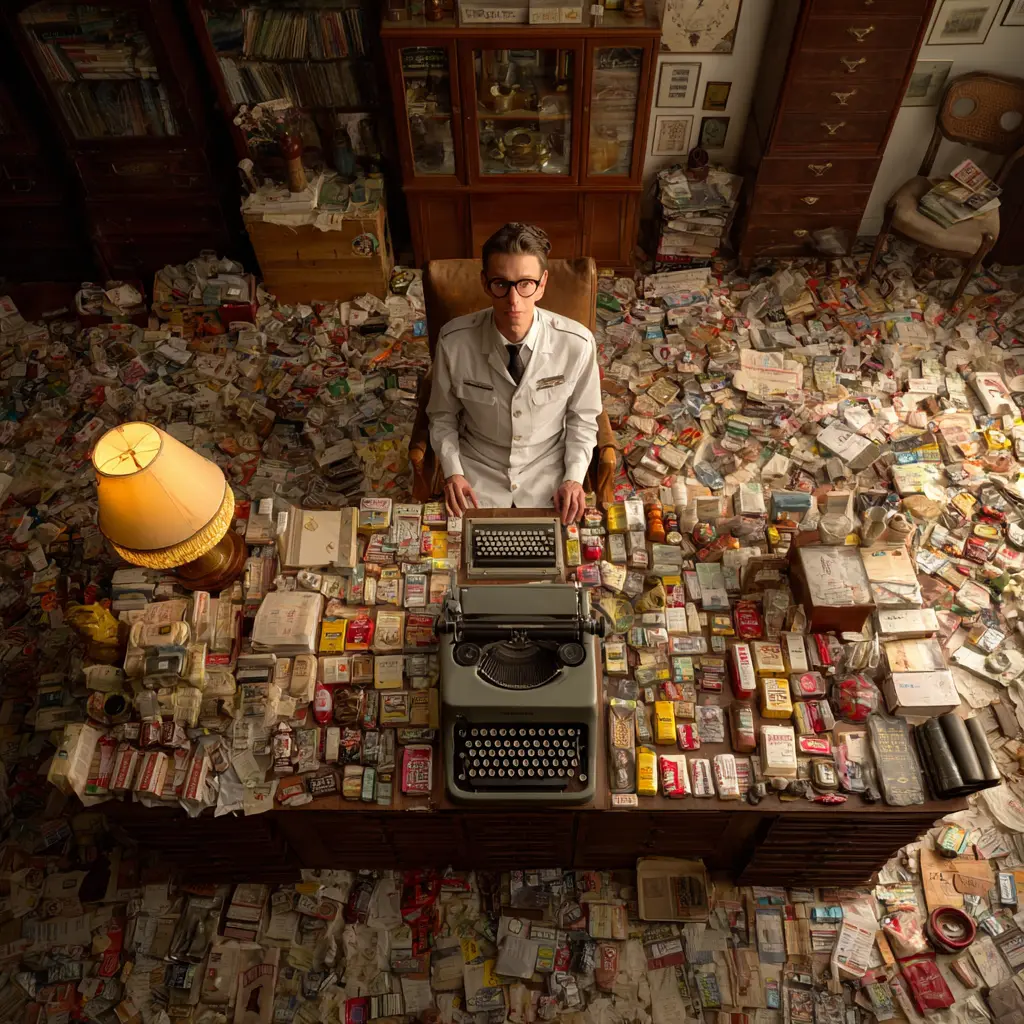
A Self-Aware Look at Sneaker Collecting and the Wonderfully Weird World of Fringe Hobbies With Mike Savage
Let me be honest with you right up front: I am a grown man who gets genuinely excited about shoes.
Not wearing shoes—although I do wear them, in case you were wondering—but collecting them.
I have dedicated real time, real money, and real emotional energy to acquiring sneakers that I will likely never run in, hike in, or even walk to the mailbox in.
They sit on shelves.
They get admired.
Occasionally, I open a box just to smell that new-shoe smell and then close it again like some kind of footwear sommelier.
This may seem silly to outsiders, this kind of hobby, but to those who are passionate about it, it’s deeply important.
And I know I’m not alone.
There are millions of us out there, people who track release dates the way other people track stock tickers, who can identify a sneaker silhouette from across a crowded room faster than they can identify their own cousin at a family reunion.
I’ve written about the incredible community that sneaker culture creates, and I’ve spent months researching the rarest sneakers on the planet.
But lately I’ve been thinking about something broader: where does sneaker collecting sit in the grand constellation of niche hobbies?
And more importantly, are there people out there whose collections make mine look downright mainstream?
Spoiler alert: there absolutely are. And their stories are fantastic.
The Sneakerhead Spectrum: From Casual to Certifiably Obsessed
Within sneaker collecting itself, there’s already a wide spectrum of intensity. You’ve got your casual collectors—people who grab a nice pair of retro Jordans when they happen to spot them on sale—and then you’ve got people like me, who maintain spreadsheets of upcoming drops and have strong opinions about the difference between “OG colorways” and “retro reissues.”
I recently wrote a deep dive into sneaker collecting trends heading into 2026, and let me tell you, the landscape is getting wilder. We’re talking triple-collaboration releases between Fragment Design, Union Los Angeles, and Jordan Brand. We’re talking AI-powered authentication systems.
We’re talking sneakers tied to blockchain NFTs stored in actual vaults. At some point, collecting shoes became more technologically complex than most people’s jobs.
And then there’s the athletic sneaker subset—a niche within a niche. These are the collectors who focus exclusively on performance basketball shoes, running shoes, or cross-training sneakers.
They don’t care about fashion collaborations or hype drops.
They want the shoe Kobe wore when he dropped 81 points.
They want the exact model that carried someone across a marathon finish line.
For them, the sneaker isn’t an art object. It’s a relic. A piece of athletic mythology preserved in rubber and mesh.
I respect those people enormously. I also think they might be slightly more unhinged than I am, which is saying something.
The Broader Universe of “Wait, People Collect That?”
Here’s the thing about collecting: no matter what you collect, there’s always someone out there collecting something stranger, and they’re just as passionate about it as you are about your thing. According to research published on the psychology of collecting, approximately 40% of American households engage in some form of collecting behavior.
That’s a staggering number.
And when you factor in the global population, you start to realize that the world is basically one giant flea market where everyone is quietly hoarding something they love.
Let me walk you through some of the fringe collecting categories that have taught me to never, ever judge another person’s hobby.
Vintage Airline Barf Bags – Yes, you read that correctly. There is an active, enthusiastic community of people who collect airline sickness bags. Unused ones, to be clear—I feel like that distinction matters. Collectors prize bags from defunct airlines, unusual designs, and limited editions. Some of these bags date back to the golden age of aviation, featuring gorgeous mid-century graphic design. There are collectors with thousands of unique specimens, cataloged and displayed with the same reverence I give my Jordan 1s. The next time I feel self-conscious about my sneaker wall, I will think of these brave souls and feel a warm kinship.
Sugar Packets – The technical term for collecting sugar packets is “sucrology,” which sounds like it should be a medical specialty but is actually just what happens when someone visits a diner and walks out with a pocketful of sweetener. Sucrologists—and yes, they call themselves that with a straight face—seek out rare designs, defunct restaurant branding, and commemorative packets from special events. Some collections number in the tens of thousands. I can barely organize my closet, and these people are maintaining museums dedicated to granulated sugar.
Belly Button Lint – I almost didn’t include this one because I wanted you to take the rest of this article seriously. But it’s real. There are people who collect their own navel lint. One Australian man held a Guinness World Record for the largest collection. He kept jars of it. Organized by date. I want to be clear: I am not making fun of this man. I am in awe of his commitment to a vision. That kind of dedication is exactly what separates a casual hobbyist from a true collector. The medium is… unconventional. But the spirit? Pure.
Flashlights – The flashlight collecting community is one of those rabbit holes you fall into at 11 PM on a Tuesday and emerge from three hours later knowing more about LED lumens than you ever thought possible. Collectors chase vintage models, military-issue lights, limited-edition titanium builds, and custom machined pieces that cost more than some used cars. There are forums with thousands of active members debating beam patterns and battery chemistry with the same intensity that sneakerheads bring to sole thickness and colorway authenticity. I feel a deep spiritual connection with these people.
Vintage Typewriters – In an age when most of us type on glass rectangles, there’s a passionate community collecting mechanical typewriters from the early-to-mid twentieth century. These collectors aren’t just acquiring machines—they’re preserving functional artifacts of communication history. A pristine 1930s Royal Quiet De Luxe or a green Hermes 3000 can fetch serious money. What I love about typewriter collectors is the crossover between utility and aesthetics. These machines are beautiful objects that also do something. Much like a great pair of sneakers, except typewriters have never been described as “heat.”
Enamel Pins – The enamel pin community exploded over the last decade, and it’s one of the most accessible entry points into the world of niche collecting. Independent artists produce limited runs of pins featuring everything from pop culture references to abstract designs to hyper-specific inside jokes. Collectors display them on fabric boards, denim jackets, and custom shadow boxes. The secondary market for rare pins can get surprisingly competitive. A pin that sold for eight dollars at a convention might resell for hundreds. If that sounds familiar, it’s because it’s exactly the same dynamic that drives sneaker resale—just smaller and pointier.
Antique Buttons – Button collecting, or “button hunting,” has a surprisingly robust following with organized societies, annual conventions, and a grading system for condition and rarity. Collectors pursue everything from Civil War uniform buttons to Victorian glass buttons to Art Deco Bakelite designs. Like sneaker authentication, the button world has its own cottage industry of experts who can identify a button’s origin, age, and materials with a single glance. I would never have expected to type the sentence “sneaker collecting and button collecting have a lot in common,” but here we are, and it’s absolutely true.
What All of Us Weirdos Have in Common
The more I learn about other collecting niches, the more I realize we’re all driven by the same fundamental impulses. Research from Invaluable’s study on the psychology of collecting points out that human beings have been gathering objects for well over 100,000 years—archaeologists have found ancient crystal collections in southern Africa that predate written language. We are, at our core, creatures who find meaning in accumulating things that matter to us. Stanford research has even suggested that people often begin collections almost accidentally, once they realize they own two of the same kind of item and their brain shifts from “this is redundant” to “this is the beginning of something.”
Whether you’re chasing a deadstock pair of Air Jordan 13s in the Chicago colorway or tracking down a 1940s airline sickness bag from Pan Am, the emotional architecture is the same: anticipation, pursuit, acquisition, satisfaction, display, and then—almost immediately—the restless itch to find the next piece. It’s a loop. A beautiful, slightly irrational, deeply human loop.
As someone who also dabbles in collecting contemporary art—I’ve written about artists like David Maisel and Todd Chilton—I can tell you that the feeling of finding the right piece of art is nearly identical to the feeling of unboxing a grail sneaker.
Your pulse quickens.
Your brain lights up.
You think, “This is the one.”
And then two weeks later, you’re already scanning for the next one. It’s the same beautiful affliction, no matter the medium.
The Outsider Problem (Or: Explaining Your Hobby at a Dinner Party)
Every collector knows the moment. You’re at a dinner party, someone asks what you do for fun, and you have to make a split-second decision about how deep to go. Do you say “I collect sneakers” and leave it at that, hoping they’ll nod politely and change the subject? Or do you accidentally spend twenty minutes explaining the difference between Nike SB Dunks and regular Dunks, the significance of the “Paris” colorway, and why a pair of shoes someone wore in a basketball game in 1997 is worth more than their car?
I have made the wrong choice at that fork more times than I care to admit.
But here’s what I’ve come to understand: every collecting niche has this same problem.
The sugar packet collector can’t easily explain why a packet from a Howard Johnson’s that closed in 1978 makes their heart sing.
The flashlight enthusiast can’t casually convey why a particular beam tint is superior without sounding like they’re preparing for a very specific apocalypse.
And the typewriter collector constantly fields the question, “But why don’t you just use a computer?”—a question so fundamentally missing the point that it barely deserves an answer.
The truth is, collecting has never been about practicality. Research on the psychology of collecting consistently shows that the hobby activates the brain’s pleasure centers in ways that mirror the anticipation of any deeply desired reward. The dopamine hit comes not from owning the object, but from the hunt itself—the searching, the comparing, the near-misses, and finally the triumphant acquisition. Every fringe collector, from the sneakerhead to the button hunter, is essentially chasing the same neurological high. We’re all just choosing different vehicles for the ride.
Why I’ll Keep Collecting (Even When It Makes No Sense)
Look, I know my sneaker collection doesn’t cure any diseases. It doesn’t solve climate change. It doesn’t even solve the problem of what to wear on a rainy Tuesday, because I’m certainly not wearing my grails in the rain. But it brings me joy. It connects me to a community of people who understand, without any explanation needed, why a particular shade of red on a particular shoe from a particular year matters.
And I think that’s the thread that ties all of us fringe collectors together. We’ve each found our thing—the object or category that speaks to something in us that we can’t fully articulate. For me, it’s sneakers and the stories behind the world’s rarest pairs. For someone else, it’s antique buttons or vintage flashlights or airline memorabilia. The subject doesn’t matter nearly as much as the feeling—that quiet, persistent pull toward completeness, toward understanding, toward the next great find.
So here’s my message to every collector reading this, no matter how niche your category: you’re not weird. Or, more accurately, you are weird, and so am I, and so is roughly 40% of the American population. We’re a nation of magnificent obsessives, and the world is better for it. Now if you’ll excuse me, I have a February release calendar to review and a pair of Fragment x Union x Air Jordan 1s that aren’t going to secure themselves.
Stay laced up, friends.
— — —
Mike Savage of New Canaan, CT is the Founder of 1-800Accountant that helps businesses with their accounting services and needs through cutting-edge technology and customer support. He runs the company alongside CEO Brendon Pack. In his spare time, Savage enjoys collecting Michael Jordan sneakers, vintage Lego sets, and unique pop art. He and his wife also spearhead the Savage-Rivera Foundation to help impoverished families in Honduras.